Arri Phillips-Askew
15 May, 2026
There is a distinct gravity to sitting in the House of Representatives chamber on Budget night. Watching the Treasurer hand down the 2026–27 Federal Budget in person, you can feel the weight of the decisions being made. The government framed this budget as a hard road to reform. An ambitious attempt to tackle intergenerational equity, cost-of-living pressures, and long-term economic resilience. But as the echoes of the speech faded, a stark reality set in. For young Australians fighting to buy their first home, this budget does not pave a road to equity. Instead, it builds a barrier. While there are elements of this budget worth praising, the core structural tax changes create a deeply unfair landscape for the next generation.

The most frustrating aspect of the newly announced housing reforms is how they manage to protect older, wealthy investors at the direct expense of young, aspiring buyers. The government’s approach to negative gearing and capital gains is fundamentally flawed. Under the new rules, negative gearing will be restricted to new builds starting July 2027. Crucially, however, existing investment properties are being grandfathered. If you already owned an established rental property before Budget night, you keep your tax deductions. This creates an immediate, unfair advantage. It protects older, established wealth while pulling up the ladder behind them. By stripping negative gearing from future buyers of established properties while preserving it for existing owners, the system penalises the very people trying to break into the market. It entrenches a two-tier system where young accumulators are forced onto a uneven playing field against entrenched investors who face entirely different tax rules. Replacing the 50% Capital Gains Tax discount with a return to cost-base indexation is a massive structural shift. While the government argues this targets property speculation, it further complicates the market for everyday buyers. If an investor buys a newly built home, they get a choice of CGT rules but the next person they sell it to won’t get the discount. This dampens the long-term resale value and appeal of property for younger buyers trying to build equity over time.

The single largest saving measure in this budget is a massive $37.8 billion cut to the National Disability Insurance Scheme over the forward estimates. The government claims this is about sustainability and returning to original intent, but we must call this what it is, which is a major funding cut to a vital safety net. Funding should not be hacked away from the NDIS to repair the bottom line. The cost-of-living pressures hitting our community do not disappear if you have a disability. In fact, they multiply. Cutting participation supports before state-funded foundational supports are even fully designed or operational leaves vulnerable people at extreme risk. A society should be judged on how it treats its most vulnerable, and balancing the budget on the backs of NDIS participants is a step backward.

To be fair, the budget isn’t entirely bleak. The government deserves praise for rolling out targeted, practical measures designed to ease immediate financial pain. The continuation of personal income tax cuts such as dropping the 16% rate down to 15% this July, and down to 14% next year will put real money back into the pockets of younger, lower-income workers. Allowing workers to claim a standard $1,000 deduction for work-related expenses without keeping a mountain of receipts is a fantastic, common-sense reform that simplifies tax time for millions. The $2 billion Local Infrastructure Fund aimed at unlocking 65,000 new homes is a step in the right direction. Boosting supply is essential, even if the tax framework surrounding it remains broken.
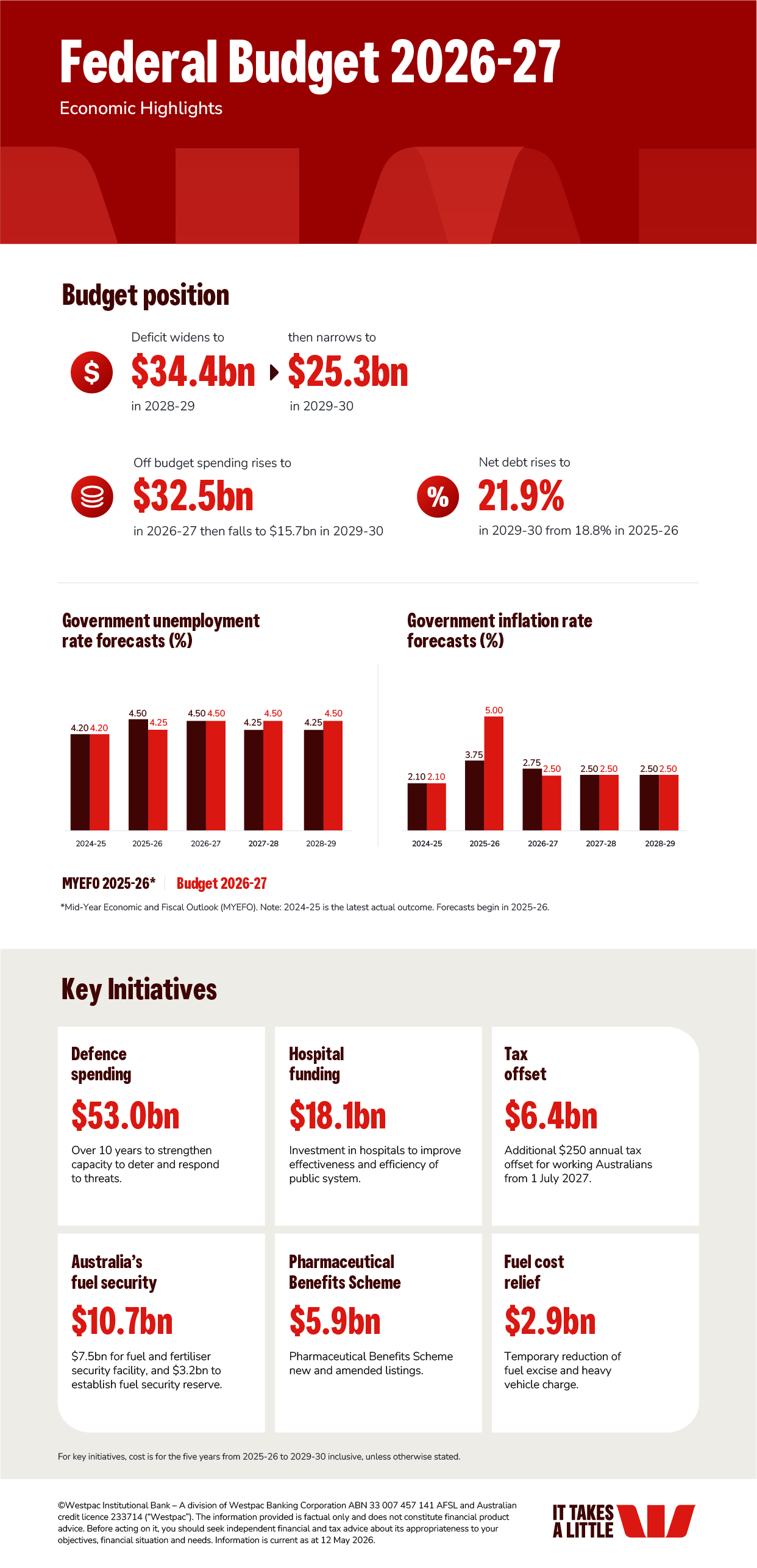
In the wake of the budget, certain sections of the Murdoch media have predictably resorted to sensationalist reporting, focusing on culture wars or manufactured outrage to drive clicks. This kind of reporting condones a superficial view of national policy, completely ignoring the complex economic realities everyday Australians are facing on the ground. While the media hyper-focuses on distractions, the budget quietly commits to massive, long-term structural spending that demands serious scrutiny. Most notably, defence spending is locked in to reach 3% of GDP by 2033, heavily driven by our ongoing AUKUS commitments and a $53 billion decade-long strategy. When billions are readily allocated to nuclear submarines and global defence supply chains, it becomes incredibly difficult to accept the argument that we cannot afford to fully fund the NDIS or properly subsidise first-home buyers.
Let’s focus on a few prominent Murdoch articles.
Your Capital, His Gain from The Daily Telegraph frames the structural changes to CGT as a direct government raid on personal wealth. It implies the Treasurer is gouging everyday Australians by replacing the 50% CGT discount with cost-base indexation, spinning it as an aggressive, pseudo-communist overreach that penalises anyone trying to get ahead. Why is this misinformation? The 50% CGT discount disproportionately lines the pockets of high-income earners who use property speculation to minimise their tax. By presenting the policy as an attack on your capital, the article completely ignores how the existing discount actively locks out young first-home buyers. The previous tax setting inflated property prices by encouraging investors to outbid everyday buyers for established homes just to flip them for a tax-sheltered profit. Returning to indexation simply means investors are taxed on real profits adjusted for inflation, rather than receiving a blanket taxpayer-funded discount.
Next, Jim’s Guide to Lying from The Courier Mail. This line of attack focuses heavily on the political broken promise angle. Because the government previously indicated it wouldn’t mess with negative gearing or CGT rules, the right-wing press used this to label the entire budget a deceptive layout of toxic taxes built on a lie. Why is this misinformation? Labeling a major structural pivot as a lie is a classic distraction tactic used to avoid debating the actual economic merits of the reform. When economic conditions shift, such as the compounding housing crisis and global inflationary pressures, the public expects a government to adapt its policy rather than blindly sticking to an outdated playbook. As senior economic commentators have noted, the right-wing press resorted to these fierce lying and communism narratives precisely because they couldn’t attack the rest of the budget. The government’s massive cuts to the NDIS, cuts to environmental funding, and massive funding allocations for AUKUS and national defence are straight off the conservative wishlist. They had to manufacture outrage over housing reform because the rest of the budget closely aligned with their own fiscal goals.
Now for my favourite headline, The Jim Reaper from Herald Sun. Playing on the Grim Reaper, this narrative paints Treasurer Jim Chalmers as a financial executioner destroying the retirement dreams of older Australians and killing off vital economic incentives. It focuses heavily on the death of negative gearing concessions for established properties and the tightening of discretionary trusts. And why is this misinformation? The Reaper didn’t touch existing portfolios. The headline is pure sensationalism because the budget explicitly grandfathered all existing property investments. Anyone currently negatively gearing an established property keeps their deductions. No one’s current retirement strategy was slaughtered. It also misrepresents the purpose of negative gearing. Negative gearing is only a benefit if an investor is actively losing money on a property. Taxpayers shouldn’t be forced to permanently subsidise a stacked system that favours property losses for wealthy investors while younger generations can’t even secure a baseline mortgage.

Sitting in that chamber, it became clear that the 2026–27 Budget is a missed opportunity. It correctly identifies the symptoms of an unequal economy, but prescribes a cure that protects the wealthy at the expense of the young. If the government truly wants to solve intergenerational inequity, it needs to stop grandfathering the privileges of the past and start building a tax and housing system that gives young Australians a genuine chance to succeed.


Leave a comment