Arri Phillips-Askew
February 25, 2026

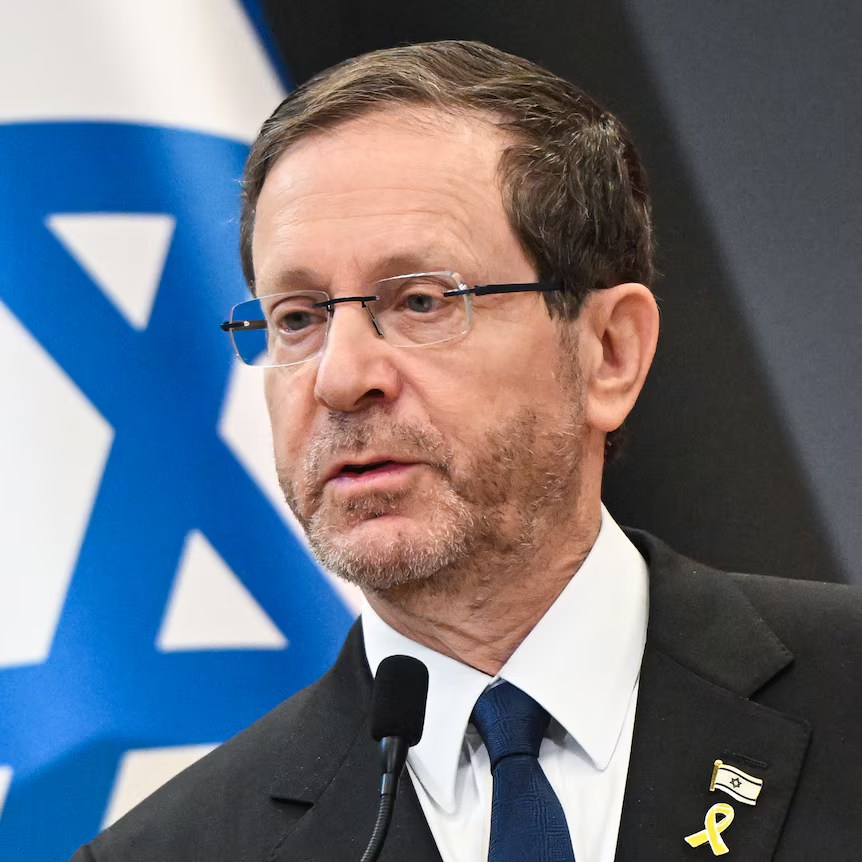
The four-day state visit of Israeli President Isaac Herzog to Australia this February was framed by the Albanese Government as a mission of healing and solidarity. Invited in the wake of the tragic December terror attack at Bondi Beach, Herzog’s presence was intended to offer comfort to a grieving Jewish community (7News, 2026). However, the visit instead ignited a firestorm of civil unrest, exposing deep fractures in Australian social cohesion and raising urgent questions about the state of the right to protest in New South Wales. Recent sociological analysis suggests that such state visits, when conducted amidst active international conflict, often act as “catalysts for domestic polarisation” rather than instruments of unity (Journal of Australian Political Economy, 2026).
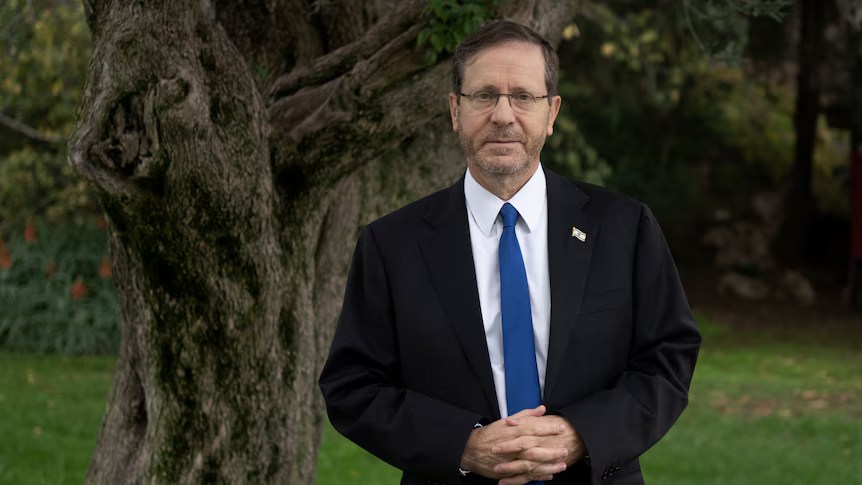
Prime Minister Anthony Albanese’s decision to extend an official invitation to President Herzog was met with immediate domestic pushback. While the Prime Minister emphasised the need for unity following the Bondi tragedy, critics from the Jewish Council of Australia and various human rights organisations argued that hosting a leader accused by a UN commission of inciting genocide was a diplomatic failure (The Independent, 2026). Legal scholars have noted that this invitation occurred under a “highly repressive and restrictive” legal framework, following the passage of the Terrorism and Other Legislation Amendment Bill 2025 (Sydney Criminal Lawyers, 2026). The controversy set the stage for one of the most significant security mobilisations in Sydney’s recent history, as the state government and police prepared for a “major event” under rarely invoked legislative powers (The New Daily, 2026).

On February 9, what began as a massive but peaceful demonstration of approximately 20,000 people at Sydney Town Hall quickly spiraled into chaos (Sydney Criminal Lawyers, 2026). Protesters attempted to march toward the NSW Parliament in defiance of a police ban, leading to a response characterised by the use of pepper spray, physical force, and at least 27 arrests (Amnesty International, 2026). Human Rights Watch and legal observers reported several instances of what they termed “excessive force,” with verified footage showing police officers punching pinned protesters and deploying pepper spray into crowds that included journalists and legal observers (The Guardian, 2026). Perhaps most contentiously, there were numerous reports of the forceful dispersal of Muslim men in the middle of a Maghrib (sunset) prayer, an act that has been described by civil liberties advocates as a violation of the “implied constitutional freedom of political communication” (NSW Council for Civil Liberties, 2026).

Assistant Police Commissioner Peter McKenna defended the tactics by stating officers were “threatened, jostled, and assaulted” during what he described as “rolling fights” (NSW Police Force, 2026). However, NSW Labor backbencher Anthony D’Adam, who witnessed the events, described the police reaction as “totally over-the-top” and criticised the “repressive” nature of the laws governing the assembly (The Canberra Times, 2026). Academic reviews of the incident suggest that the state’s use of “Major Events” legislation effectively “criminalised standard assembly behaviours,” shifting the burden of proof from the state to the citizen (University of Sydney Law Journal, 2026).

The fallout from the protests was further exacerbated by a polarising media narrative. During an interview on Nine’s TODAY show, host Karl Stefanovic drew widespread condemnation for questioning the legitimacy of Muslim protesters praying during the rally (The Australia Institute, 2026). Stefanovic asked whether the prayer was a “legitimate” religious observance or if the participants were merely “baiting the police.” The Australian National Imams Council (ANIC) labeled the comment “Islamophobic and inflammatory,” suggesting it served to dehumanise worshippers and justify police aggression (SBS News, 2026). Sociologists have identified this as a “reactive modality of surveillance,” where media rhetoric is used to punish dissenters and exert a “chilling effect” on future protests (Surveillance & Society, 2025).

NSW Premier Chris Minns also faced significant pressure to apologise for the police disruption of these prayers. While Police Commissioner Mal Lanyon reportedly reached out to some community leaders to express regret, Premier Minns remained firm (The Guardian, 2026). He stated he would not apologise, arguing that police would only disrupt a service if it were “in the middle of a riot” (The New Daily, 2026). This characterisation has been heavily contested by multiple witnesses who maintain the violence was initiated by police lines rather than the demonstrators. Legal analysts at the Hugo Law Group have noted that the “Major Event” designation may “modify the liability of Police,” complicating future claims for compensation related to assault or battery (Hugo Law Group, 2026).

The events of February 2026 have left a complex legacy. While President Herzog has since departed, the domestic repercussions continue to unfold. Following a significant number of public complaints, the Law Enforcement Conduct Commission (LECC) has announced an independent investigation, titled “Operation Makalu,” into police conduct during the Sydney protests (LECC, 2026). Simultaneously, the use of Major Events legislation and anti-protest laws passed in late 2025 is now the subject of a Supreme Court challenge by civil liberties groups (O’Brien Solicitors, 2026). The visit has intensified calls from within the Labor party and the crossbench for a formal review of Australia’s military exports and diplomatic ties with the current Israeli administration.

As the dust settles, this visit may be remembered less for the solidarity it sought to foster and more for the questions it raised about where the line is drawn between public safety and the suppression of political dissent in 21st-century Australia.
references
7News. (2026, February 8). President Herzog arrives in Australia for state visit following Bondi tragedy.
Amnesty International. (2026, February 9). Dissent suppressed: The police response to the Herzog protests.
The Australia Institute. (2026, February 15). The beatings will continue until social cohesion improves.
Beazley, J., & Buckley, P. (2026, February 14). Sydney protesters want to sue police over alleged brutality at the anti-Herzog rally. The Guardian Australia.
D’Adam, A. (2026, February 12). Over the top: Why the police response to the Town Hall rally failed. The Canberra Times.
Hugo Law Group. (2026). Liability and the Major Events Act: Legal Implications for 2026.
The Independent. (2026, February 9). Herzog visit: The international legal perspective on Australia’s invitation.
Journal of Australian Political Economy. (2026). Diplomacy and Domestic Unrest: The Herzog State Visit. 92(1).
Law Enforcement Conduct Commission (LECC). (2026, February 17). Media Statement: Progress of investigation in Operation Makalu.
The New Daily. (2026, February 11). Minns stands firm: No apology for prayer disruptions.
NSW Council for Civil Liberties. (2026, February 17). The State Set the Scene for Police Brutality: President Timothy Roberts on the Herzog Rally.
NSW Police Force. (2026, February 10). Assistant Commissioner McKenna defends operational decisions at Town Hall.
O’Brien Solicitors. (2026). Constitutional Challenge: The 2025 Anti-Protest Amendments.
SBS News. (2026, February 11). National Imams Council condemns “baiting” comments by Karl Stefanovic.
Stefanovic, K. (2026, February 10). Interview with Premier Chris Minns. TODAY Show, Nine Network.
Surveillance & Society. (2025). Surveillance and the Media: Pre-emptive Narratives in Civil Dissent. 23(4).
Sydney Criminal Lawyers. (2026, February 20). The blanket ban on protests in NSW has been lifted, but the damage is done.
University of Sydney Law Journal. (2026). Criminalising Assembly: The 2025-2026 Major Events Regulations. 48(2).
Leave a comment