Arri Phillips,
7 January, 2026
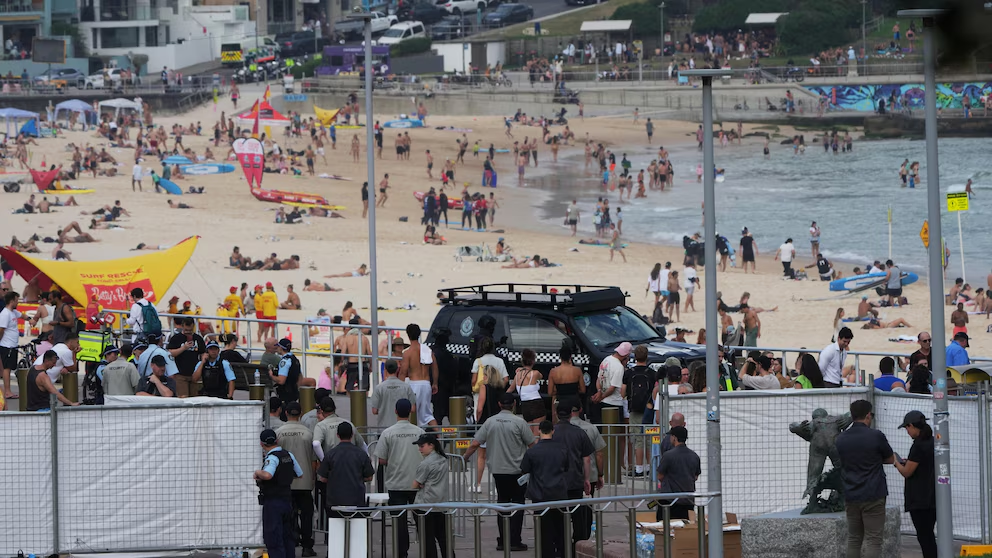
Everyone agrees something went wrong. No one agrees on what the fix should be. Every response is being read as a moral signal. Fights of free speech versus public safety have only complimented fights of antisemitism and national security. This article looks through policy and focuses on credibility, hesitation, and pressure.
On 14 December 2025, around 1,000 people attended a celebration of Hanukkah on Bondi Beach in Sydney, Australia which was interrupted by an Islamic State inspired terrorist attack. 15 people were killed, including a 10-year-old child.
The attack immediately triggered a recalibration of Australia’s political discourse on terrorism, social cohesion, and state responsibility. While public officials across the political spectrum expressed condemnation and solidarity, consensus fractured rapidly over how the state should respond. This fragmentation is not unusual in the aftermath of terrorist violence. As Crenshaw (2011) observes, terror attacks rarely produce policy clarity; instead, they expose latent tensions between security, liberty, and political legitimacy.
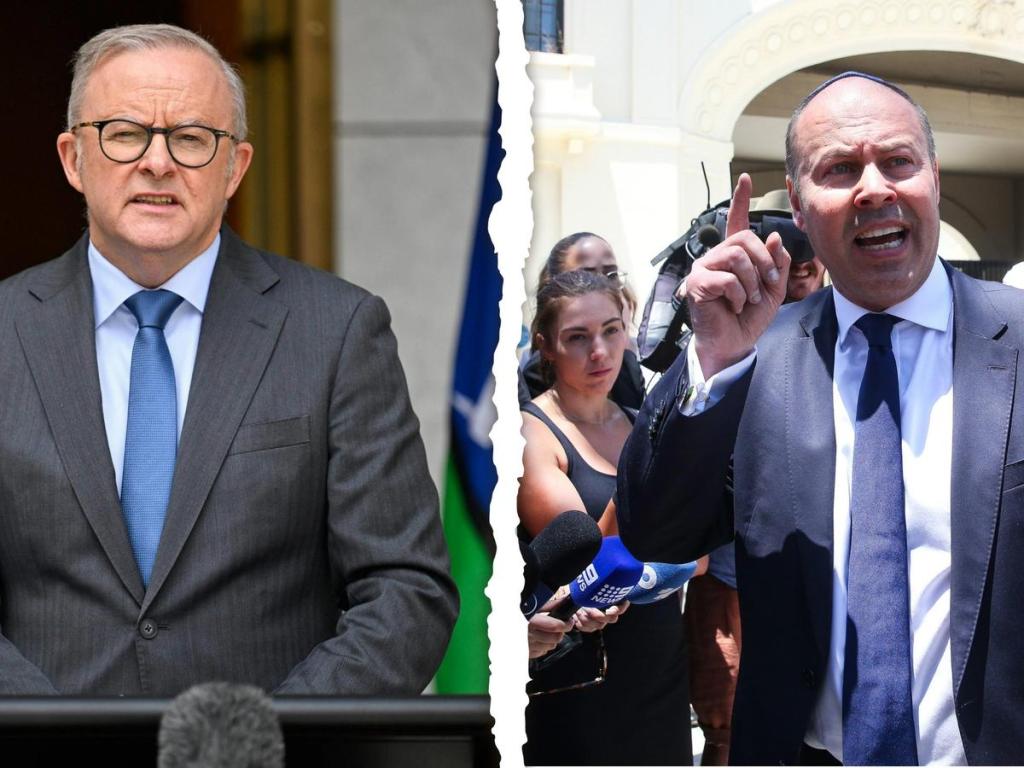
In the Australian context, the Bondi attack intensified three overlapping pressures: the demand for decisive leadership, the risk of political overreach, and the moral expectations placed on symbolic action. The federal government’s response, centred on intelligence reviews and administrative assessments rather than the immediate establishment of a royal commission, has been framed by ministers as an exercise in institutional restraint. Yet restraint itself has become politically contested. As Boin et al. (2016) argue, crisis leadership is evaluated less on technical correctness than on perceived decisiveness and moral clarity. In this sense, hesitation is not neutral; it is interpreted.
Opposition parties and crossbench figures have capitalised on this interpretive space, calling for a Commonwealth royal commission to investigate both the security failures preceding the attack and the broader rise of antisemitism in Australia (ABC News, 2026). Royal commissions in Australia occupy a unique political role: while formally investigatory, they also function symbolically, signalling that an issue is of national moral gravity (Prasser, 2006). Demands for such an inquiry therefore reflect not only a desire for accountability, but a struggle over narrative ownership in the post-Bondi political environment.

Calls for inquiries and reviews following the Bondi attack also revive a familiar concern in Australian governance: the state’s tendency to prioritise investigation over implementation. This pattern is particularly evident in the case of Aboriginal deaths in custody, where the 1991 Royal Commission produced 339 recommendations, many of which remain unimplemented more than three decades later (Cunneen, 2001; Commonwealth of Australia, 1991). The persistence of this failure has become emblematic of what critics describe as inquiry fatigue, where institutional energy is expended on producing reports rather than enacting reform. We love to do these shiny reports and then let them sit on shelves collecting dust. The comparison underscores a broader scepticism surrounding post-Bondi accountability mechanisms: without political will and follow-through, further reviews risk functioning as symbolic reassurance rather than instruments of structural change.
The intervention of major business leaders further complicated this landscape. Open letters from senior corporate figures urging stronger federal action reframed the attack as a threat to national stability rather than a matter of community security alone (ABC News, 2026). This shift is politically significant. As Culpepper (2011) notes, when economic elites engage publicly with social or security issues, governments face pressure from constituencies traditionally aligned with credibility and governance rather than activism. The Bondi response thus moved beyond partisan contestation into a broader legitimacy challenge for the federal government.

Language has been central to this legitimacy struggle. Political actors have differed markedly in their willingness to explicitly label the attack as antisemitic terrorism, with some favouring broader condemnations of hate and extremism. Scholarship on political communication suggests that such ambiguity, while intended to preserve social cohesion, can also weaken public confidence by appearing evasive (Edelman, 1988). Conversely, securitisation theory warns that explicit naming of threats can justify extraordinary state powers and deepen social divisions (Buzan, Wæver & de Wilde, 1998). The post-Bondi debate reflects this tension, with policymakers navigating between moral clarity and the risks of escalation.
The speed with which elements of the conservative political establishment sought to frame the Bondi attack also warrants scrutiny. Senior opposition figures, including Deputy Liberal leader Sussan Ley, moved quickly to link the attack to broader concerns about immigration, border control, and social cohesion. While such interventions were framed as questions of national security, their immediacy illustrates what Moffitt (2015) describes as the “performative acceleration” of crisis politics, where rapid attribution of blame becomes a mechanism for political differentiation rather than empirical clarification. In the absence of verified information about motive or systemic failure, these early framings functioned less as policy contributions and more as narrative positioning.

This politicisation sits uneasily alongside the widely reported actions of Ahmed al Ahmed, a Muslim man who intervened during the attack and helped disarm one of the perpetrators. His actions complicate simplistic civilisational framings that position Muslim identity as inherently associated with security threats. Empirical research consistently demonstrates that Muslim communities are more likely to be targets of terrorism than perpetrators within Western democracies (Kundnani, 2014; Horgan, 2017). The selective amplification of identity in political rhetoric, focusing on perpetrators while marginalising countervailing examples reinforces what Said (1978) termed “essentialist narratives”, obscuring individual agency and social complexity.
Despite this, conservative commentary increasingly linked the attack to immigration policy, suggesting deportation or tighter entry controls as appropriate responses. Such claims rest on a tenuous evidentiary foundation. Studies of domestic terrorism indicate that the majority of attacks in liberal democracies are carried out by citizens or long-term residents rather than recent migrants (Borum, 2011). Deportation-based responses therefore operate symbolically rather than substantively, offering visible toughness without addressing pathways to radicalisation, access to weapons, or intelligence coordination failures.

Parallel to this, some political actors and commentators drew rhetorical connections between the attack and debates over Palestinian statehood, implying that domestic expressions of solidarity with Palestinians contribute to antisemitic violence. This linkage is analytically unsound. While international conflicts can shape discursive environments, there is no credible evidence that advocacy for Palestinian self-determination, an internationally recognised political position, constitutes endorsement of antisemitism or terrorism (UN General Assembly, 2012). Conflating the two risks collapsing legitimate foreign policy debate into a security threat, a move that securitisation theorists warn can erode democratic pluralism (Buzan et al., 1998). There seems to be a concerted effort from the right to pretend that sympathy for other people is the same as violent extremism in order to shut down any progress that would affect their consistently harmful operation of the world.
While the expansion of education initiatives addressing antisemitism has been widely supported across the political spectrum, such efforts raise important questions about the boundaries of democratic expression. Educational responses are most effective when they clarify the distinction between antisemitism, hostility or prejudice toward Jewish people, and political advocacy concerning the Israeli–Palestinian conflict. Liberal democratic theory maintains that the protection of political protest, including participation in “Free Palestine” demonstrations, is a foundational element of democratic legitimacy (Rawls, 1999; Habermas, 1996). There is no empirical evidence to suggest that attendance at such protests is inherently linked to violent extremism or antisemitic conduct. Restricting lawful protest on the basis of perceived ideological association risks conflating dissent with danger, a dynamic that scholars warn can deepen polarisation and undermine trust in public institutions (della Porta, 2018). Consequently, educational strategies addressing antisemitism should operate alongside, rather than in opposition to, the continued protection of peaceful political expression.

By contrast, the Albanese government’s post-attack focus on tightening firearm regulations reflects a policy pathway more closely aligned with evidence-based prevention. Australia’s history of gun control following the 1996 Port Arthur massacre is frequently cited as a global example of effective harm reduction (Chapman et al., 2016). Research demonstrates a strong correlation between restrictive gun laws and reductions in mass-casualty events, without corresponding increases in other forms of violent crime (Leigh & Neill, 2010). In this context, regulatory reform addresses means rather than identity, targeting structural risk factors instead of demographic proxies.
The divergence between calls for deportation and moves toward firearm regulation underscores a broader philosophical divide in post-Bondi politics. Immigration-focused responses prioritise exclusion and symbolic reassurance, while gun control reflects a preventative logic grounded in institutional responsibility. As McCauley and Moskalenko (2017) argue, effective counterterrorism strategies focus on reducing opportunity and capacity rather than attempting to pre-empt ideology. The political challenge, therefore, lies not in identifying an external “other”, but in strengthening the resilience of domestic governance frameworks.
Ultimately, the political aftermath of the Bondi attack illustrates how terrorism reshapes governance not only through policy change, but through intensified scrutiny of leadership credibility. The central question confronting Australian politics is no longer whether something went wrong, this is broadly accepted, but whether existing institutions and rhetorical strategies are sufficient to meet public expectations of protection, accountability, and moral resolve. As history suggests, failure to address this credibility gap may prove as destabilising as the security failures that preceded the attack itself.
references
ABC News (2026) Nation’s largest employer bodies throw support behind royal commission into Bondi Beach terror attack. Australian Broadcasting Corporation.
Boin, A., ’t Hart, P., Stern, E. and Sundelius, B. (2016) The politics of crisis management. 2nd edn. Cambridge: Cambridge University Press.
Borum, R. (2011) ‘Radicalization into violent extremism I: A review of social science theories’, Journal of Strategic Security, 4(4), pp. 7–36.
Buzan, B., Wæver, O. and de Wilde, J. (1998) Security: A new framework for analysis. Boulder: Lynne Rienner.
Chapman, S., Alpers, P., Agho, K. and Jones, M. (2016) ‘Australia’s 1996 gun law reforms: Faster falls in firearm deaths, firearm suicides, and a decade without mass shootings’, Injury Prevention, 22(6), pp. 1–6.
Commonwealth of Australia (1991) Royal Commission into Aboriginal Deaths in Custody: National report. Canberra: Australian Government Publishing Service.
Crenshaw, M. (2011) ‘Explaining terrorism: Causes, processes and consequences’, in Routledge handbook of terrorism research, pp. 13–31.
Culpepper, P. D. (2011) Quiet politics and business power. Cambridge: Cambridge University Press.
Cunneen, C. (2001) Conflict, politics and crime: Aboriginal communities and the police. Sydney: Allen & Unwin.
della Porta, D. (2018) Contentious politics in times of crisis. Cambridge: Polity Press.
Edelman, M. (1988) Constructing the political spectacle. Chicago: University of Chicago Press.
Habermas, J. (1996) Between facts and norms: Contributions to a discourse theory of law and democracy. Cambridge: Polity Press.
Horgan, J. (2017) Psychology of terrorism. 2nd edn. London: Routledge.
Kundnani, A. (2014) The Muslims are coming! Islamophobia, extremism, and the domestic war on terror. London: Verso.
Leigh, A. and Neill, C. (2010) ‘Do gun buybacks save lives? Evidence from panel data’, American Law and Economics Review, 12(2), pp. 509–557.
McCauley, C. and Moskalenko, S. (2017) Understanding political radicalization. Oxford: Oxford University Press.
Moffitt, B. (2015) ‘How to perform crisis: A model for understanding the key role of crisis in contemporary populism’, Government and Opposition, 50(2), pp. 189–217.
Prasser, S. (2006) Royal commissions and public inquiries in Australia. Chatswood: LexisNexis.
Rawls, J. (1999) A theory of justice. Revised edn. Cambridge, MA: Harvard University Press.
Said, E. (1978) Orientalism. New York: Pantheon.
UN General Assembly (2012) Status of Palestine in the United Nations, A/RES/67/19.


 THE ASKEW VIEW
Leave a comment